

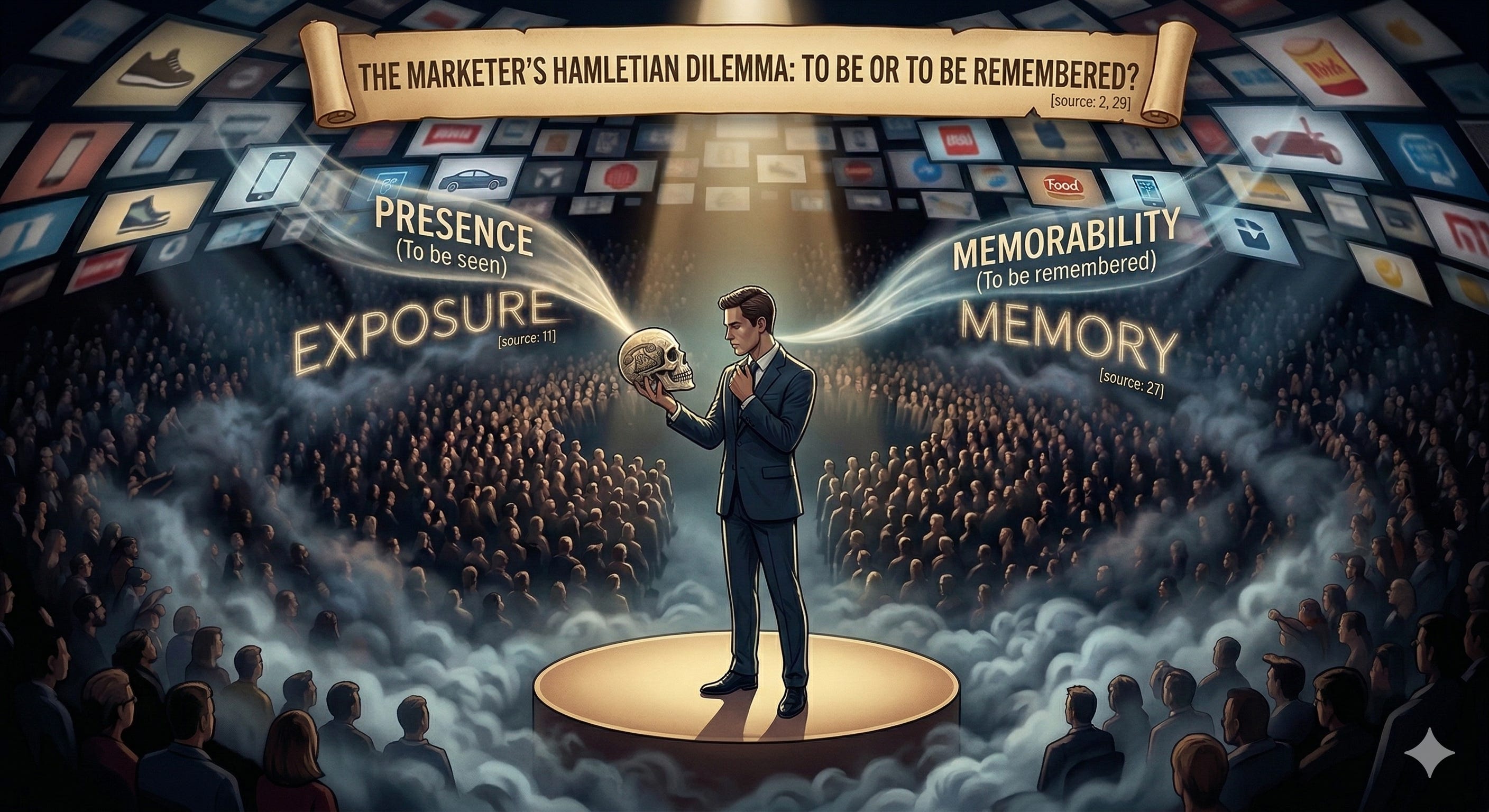
For readers outside Italy, the Sanremo Music Festival is the country’s biggest television event.
A five-night live broadcast that concentrates audience, media coverage and cultural conversation across the entire country.
In many ways, it plays a role similar to the Super Bowl in the United States: a rare moment when attention converges.
That makes it a useful lens to observe how marketing decisions are made.
In 2026 the festival generated around €72 million in advertising revenue, up from €65 million in 2025 and €60 million in 2024. At the same time the final night attracted about 11 million viewers and a 68.8% audience share, slightly below the exceptional peak of the previous year.
Numbers like these usually trigger familiar commentary: the strength of the event brand, the resilience of broadcast television, the enduring value of national tentpole moments.
All valid points.
But perhaps the more interesting question is another one.
What exactly are brands buying when they invest in a major event like Sanremo?
Audience? Of course.
But not only.
The hidden value of big events
In high-visibility environments brands are not only buying exposure.
They are also buying risk reduction.
Large cultural events reduce decision uncertainty:
they are culturally legitimate
they are easy to explain internally
they are difficult to criticize afterwards
In other words, they offer a defensible decision.
And that is not a minor detail.
In many organizations, marketing investments do not optimize only expected ROI. They also optimize decision risk.
Sanremo — like the Super Bowl or the Olympic Games — is a classic example of what international marketing calls a tentpole event: a cultural moment capable of concentrating attention, conversation and media coverage at the same time.
That helps explain why investments continue to grow even when audiences fluctuate.
The stage reduces uncertainty.
FOMO does the rest, often creating something close to marketing nirvana: price redundancy — the price of the media space becomes almost irrelevant.
But the stage alone is not enough.
There is a bias worth unpacking.
The paradox of large events
There is a paradox that anyone working in advertising recognizes.
The larger the audience, the harder it becomes to remember who actually spoke.
In major events message competition becomes extreme: more brands in the same break, more creative executions competing for attention, more narrative noise.
This is why several studies on Super Bowl advertising show an interesting pattern: people remember the ad, but not always the brand behind it.
Events multiply attention.
They do not guarantee memory.
And this is where the strategic point begins.
Presence vs memorability
A big event does not automatically create value for brands.
It amplifies the potential for value.
The real differentiator becomes memorability.
Some of the most memorable moments in advertising history happened in exactly these environments — Apple’s famous “1984” Super Bowl commercial is probably the most cited example. Not simply an ad placed inside the event, but an idea designed to live beyond the event.
The stage amplifies.
Memory comes from the idea.
Even at Sanremo there are occasional signals of this dynamic. This year one of the most talked-about spots revived a well-known Italian campaign from the early 1990s, reinterpreting it to tell the story of the transition from wired telephones to digital connectivity.
A clever move in terms of cultural memory: audiences instantly recognize the reference and connect it to the brand.
But this example also highlights another point that is often overlooked.
Not all memorability creates choice
Memorability is a strategic asset.
But it does not always produce the same economic effect.
It depends heavily on the market.
In some industries — automotive, consumer technology, luxury — communication can directly influence consumer choice.
In others, far more commoditized — telecommunications or many digital services — communication tends to build favorability, familiarity and trust.
That still matters.
But it serves a different objective.
This is where another common bias often appears inside organizations: evaluating communication from an internal perspective — how creative it is, how memorable it feels, how much people like it — instead of from the perspective of the customer’s decision.
The real problem is not execution. It is framing.
Many companies do not necessarily fail on creativity.
What often receives less attention is the strategic question behind it.
Instead of asking:
What decision should become easier for the customer?
they ask:
How can we become more visible?
The difference may sound subtle.
But it changes everything.
Because when the problem is framed incorrectly, even the best solutions risk optimizing the wrong thing.
A simple test before investing in a tentpole event
Before investing in a major cultural stage, it may be useful to pause and ask a few simple questions:
Are we buying presence or memory?
Will the brand be remembered together with the story?
Which customer decision is that memory meant to influence?
Is the context amplifying the idea — or replacing it?
When the event amplifies a strong idea, the impact can be enormous.
When the event replaces the idea, the outcome is different: the brand may buy visibility, but not necessarily choice.
The real lesson
One of the most overlooked steps before activating marketing channels is simply asking the uncomfortable questions.
The ones that force a brand to step outside its own perspective and look at itself the way customers do.
Because before attention, before memorability and before media investments, strategy begins with something much simpler:
asking the right question.
____________
Il rischio che compriamo quando compriamo Sanremo
(e perché i grandi eventi funzionano davvero solo quando generano memoria)
Sanremo è un buon punto di osservazione per capire come si prendono decisioni nel marketing.
Nel 2026 la raccolta pubblicitaria del Festival è stata di circa 72 milioni di euro, in crescita rispetto ai 65 milioni del 2025 e ai 60 milioni del 2024. Allo stesso tempo la finale ha registrato circa 11 milioni di spettatori e il 68,8% di share, sotto il picco eccezionale dell’anno precedente.
Numeri del genere di solito alimentano discussioni piuttosto prevedibili: il brand dell’evento è forte, la TV generalista tiene, il sistema funziona. Tutto vero. Ma forse la domanda interessante è un’altra.
Che cosa compra davvero un brand quando investe in un grande evento come Sanremo?
Audience? Sicuramente.
Ma non solo.
Il valore nascosto dei grandi eventi
In contesti ad alta visibilità i brand non comprano soltanto esposizione. Comprano riduzione del rischio.
Un grande evento riduce l’incertezza della decisione:
è culturalmente legittimato
è facile da spiegare internamente
è difficile da criticare ex post
In altre parole, è una scelta difendibile.
Non è un dettaglio. In molte organizzazioni la decisione di investimento non ottimizza solo il ROI atteso, ma anche la gestione del rischio reputazionale e decisionale.
Sanremo, come il Super Bowl negli Stati Uniti o le Olimpiadi a livello globale, è un classico esempio di quello che nel marketing internazionale viene definito tentpole event: un momento culturale capace di concentrare attenzione, conversazione e copertura mediatica in modo simultaneo.
Questo spiega perché gli investimenti continuano a crescere anche di fronte ad incertezza sull’aumento di ascolti già alti.
Il palco riduce l’incertezza. La FOMO agisce indisturbata e crea quella che nel marketing viene considerato il Nirvana: il price redundancy, il prezzo diventa una variabile quasi irrilevante (dello spazio).
Ma il palco da solo non basta. C’è secondo me un bias da scardinare.
Il paradosso dei grandi eventi
C’è infatti un paradosso che chi lavora nella pubblicità conosce bene.
Più grande è l’audience, più difficile diventa ricordare chi ha parlato.
Nei grandi eventi la competizione tra messaggi è estrema. Più brand nello stesso blocco pubblicitario, più creatività che competono per l’attenzione, più rumore narrativo.
È il motivo per cui molti studi sugli spot del Super Bowl mostrano un fenomeno curioso: gli spettatori ricordano lo spot, ma non sempre ricordano il brand che lo ha firmato.
L’evento moltiplica l’attenzione.
Non garantisce la memoria.
E qui entra il punto strategico.
La differenza tra presenza e memorabilità
Un grande evento non crea automaticamente valore per i brand.
Amplifica il potenziale di valore.
Il vero discriminante diventa quindi la memorabilità.
Non è un caso che alcuni dei momenti pubblicitari più ricordati nella storia siano legati a contesti di grande visibilità — come il famoso spot “1984” di Apple al Super Bowl — ma progettati per vivere anche oltre l’evento stesso.
Il palco amplifica.
La memoria la costruisce l’idea.
Anche a Sanremo si vedono segnali interessanti in questa direzione. Quest’anno, per esempio, uno degli spot più ricordati è stato quello che riprendeva una storica campagna SIP degli anni Novanta, reinterpretandola per raccontare il passaggio dal telefono con il filo alla connessione digitale.
Un’operazione intelligente sul piano della memoria culturale: il pubblico riconosce immediatamente il riferimento e lo collega alla marca.
Ma proprio questo esempio aiuta a chiarire un punto spesso trascurato.
Non tutta la memorabilità crea scelta
La memorabilità è una risorsa strategica.
Ma non produce sempre lo stesso tipo di valore economico.
Dipende dal mercato.
In alcuni settori — automotive, tecnologia, lusso — la comunicazione può influenzare direttamente la scelta del consumatore.
In altri, molto più commoditizzati — come le telecomunicazioni o alcuni servizi digitali — la comunicazione tende piuttosto a costruire favorability, familiarità e fiducia.
Non è poco. Ma è un obiettivo diverso.
Ed è qui che spesso entra in gioco un bias abbastanza diffuso nelle aziende: valutare la comunicazione dal punto di vista interno — quanto è creativa, quanto è memorabile, quanto piace — invece che dal punto di vista della decisione del cliente.
Il vero problema non è l’esecuzione. È il framing
Molte aziende non sbagliano la creatività.
Osservano poco la domanda strategica.
Invece di chiedersi:
che tipo di decisione deve prendere il cliente?
si chiedono:
come possiamo essere più visibili?
La differenza sembra sottile, ma cambia tutto.
Perché quando il problema è definito male, anche le soluzioni migliori rischiano di ottimizzare la cosa sbagliata.
Un piccolo test prima di investire in un grande evento
Un modo semplice per evitare questo errore è farsi quattro domande prima di investire in un tentpole:
Sto comprando presenza o memoria?
Il brand sarà ricordato insieme allo spot?
Quella memoria quale scelta del cliente influenzerà?
Il contesto amplifica l’idea o sostituisce l’idea?
Se l’evento amplifica un’idea forte, il valore può essere enorme.
Se l’evento sostituisce l’idea, il rischio è diverso: si compra visibilità, ma non necessariamente scelta.
Il vero insegnamento
Uno dei primi passi forse più trascurati prima di attivare i canali di marketing è quella di farsi le domande giuste quelle che ci danno più fastidio e costringono il brand ad osservarsi da fuori e allinearsi a chi compra il prodotto qualunque esso sia.