

Welcome to this newsletter. First of all let me welcome Peaklight readers as Content with a view has started its international distribution last week.
As usual I will be delivering this newsletter in double version: english and italian.
Over the past months, the debate around the future of media and content has become almost obsessively focused on traffic. Numbers are down, curves are flattening, dashboards are increasingly hard to defend in front of a board. That reaction is understandable: for years, traffic was the core metric, the foundation on which editorial, advertising and industrial models were built.
The issue is that traffic today is not simply declining. Its nature is changing.

With the expansion of AI Overviews in search and the introduction of advertising on ChatGPT, we are witnessing a deeper shift in where attention is formed and, more importantly, in when people orient themselves, compare alternatives and make decisions. In Europe, this transition carries even more weight, because it immediately collides with a topic that in the United States is often treated as a technical detail: data governance.
This is not a technological debate.
It is a question of trust, control and responsibility.
Publishers’ responses: understandable, but partial
If you look at recent statements from CEOs and media executives, a fairly consistent picture emerges. The focus is on editorial quality, technology investments, international expansion and revenue diversification. All reasonable directions. None of them should be dismissed lightly.
What these responses have in common is a mental framework that remains unchanged: the assumption that the website, or at least a fully owned digital property, is still the natural centre of the relationship with the audience.
That centre is moving.
Not because publishers chose to move it, but because users did.
Where attention is really going
Part of the traffic decline is now structural. AI-generated answers shown directly in search results reduce the need to click, especially for generic informational and service content. This is not a temporary dip, nor something that can be fixed by simply “doing better SEO”. It reflects a behavioural shift.
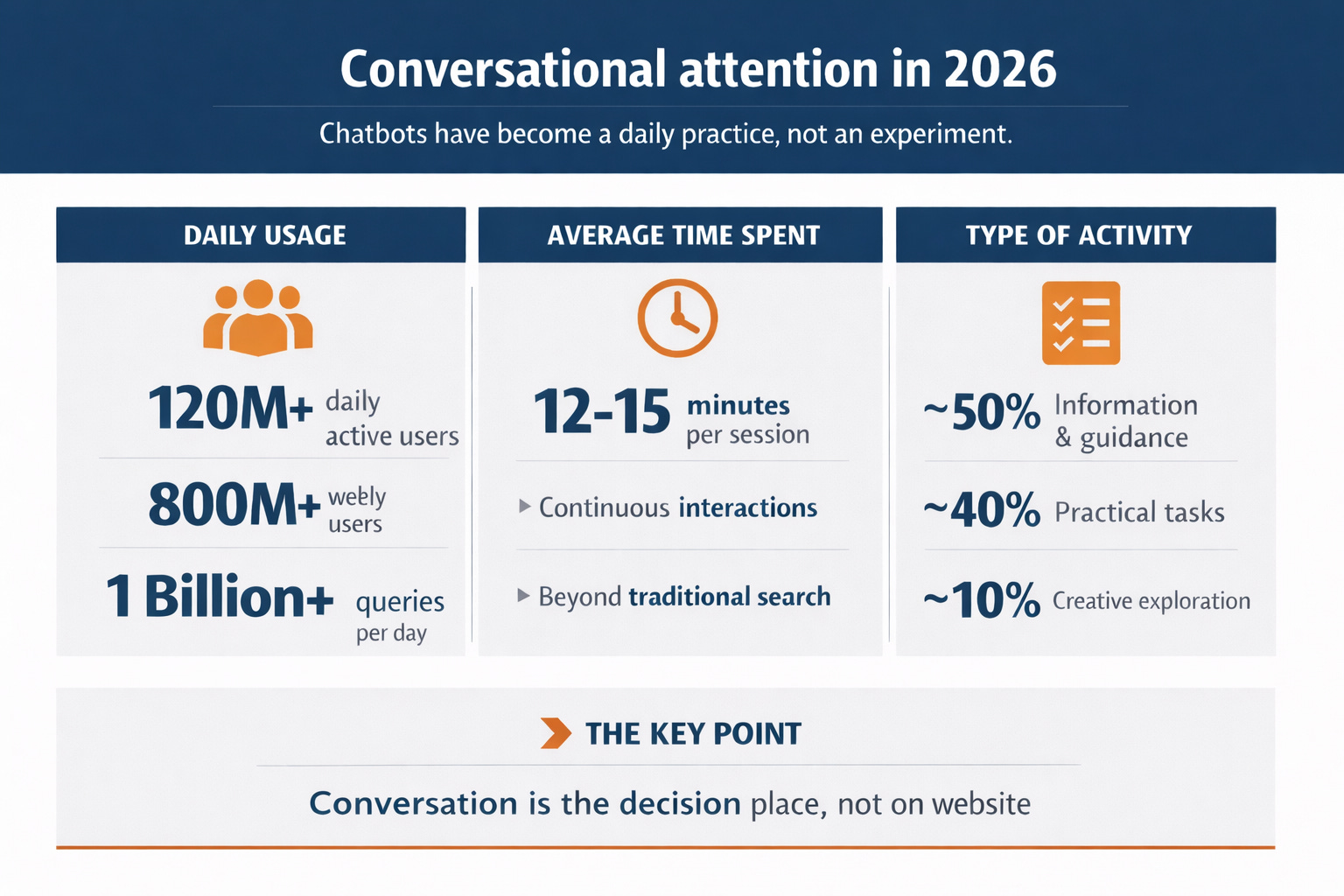
Global usage, US-led (2025 baseline) https://www.index.dev/blog/chatgpt-statistics?utm_source=chatgpt.com
At the same time, a new interaction space is emerging. People are increasingly using chatbots not only to look up information, but to think things through, gain clarity, compare options and reach a decision. Time spent is higher, attention is more focused, and the interaction often happens much closer to the final action. From a qualitative standpoint, this is very different from the traditional click.
This is where the topic of GEO, Generative Engine Optimization, comes into play. It is often presented as the new frontier for “being found” in chatbots and recovering traffic. In practice, GEO responds to a tactical need: avoiding disappearance from conversational surfaces. It can help make content more usable for generative engines, more quotable, more aligned with how models work. But it does not change the direction of travel.
Even when a piece of content is referenced within a conversation, the user is no longer looking for a website to visit. They are looking for a solution. The conversation is no longer a pre-step to navigation; it is increasingly the place where the decision is made. Expecting GEO to “bring traffic back” means misunderstanding user behaviour, not AI mechanics.
This does not make GEO irrelevant. It simply puts it in its proper place: a presence tactic, not a growth strategy. SEO will still account for a significant share of overall traffic and cannot be abandoned. But neither SEO nor GEO is sufficient on its own.
The more uncomfortable, yet realistic, conclusion is that passive traffic will become increasingly rare. If a brand or an IP is not relevant, if it does not solve a functional or aspirational problem, if it does not reduce complexity or support a concrete choice, it will not be explored. Not on a website, and not inside a chatbot.
Chatbots are becoming a true attention infrastructure with very high selectivity: a space where utility concentrates, cognitive friction is reduced and the path to action is shortened. In this kind of infrastructure, winning is not about better optimisation, but about being structurally useful. It is as if, at the entrance of the party, the number of bouncers has doubled. In the past, you could throw your own party and hope someone would show up. That is becoming much harder.
RAG: why it has become central (and why it is often misunderstood)
In this context, Retrieval-Augmented Generation (RAG) becomes relevant. It is often discussed as a niche technical topic, but it actually addresses a very concrete strategic issue.
Many companies, including in Europe, are already using it in production. Customer care, knowledge bases, sales support, regulated content environments: RAG is adopted because it allows AI systems to work with proprietary content without losing control over it. Content stays where it is. It is not absorbed indiscriminately into the model, but retrieved when needed.
This approach fits particularly well in contexts where editorial responsibility and compliance matter. It is also one of the few models that aligns credibly with the European regulatory framework, precisely because it separates content usage from content appropriation.
RAG is not meant to make AI reply better, but to decide when and where AI can act properly.
The real issue: data, not technology
When partnerships between media companies and AI platforms are discussed, the decisive topic is data management.
Conversational data — what users write, ask and explore — remains under the control of the platform and is still strongly protected. Direct access to that level of granular information is difficult to imagine in the short term. Even if it were possible, it would raise major ethical questions and create a significant business asymmetry with the United States.
The picture is different when it comes to data related to content usage: which content is consulted, on which topics, how often and in which contexts. Here, there is real room for negotiation, provided data is aggregated and anonymised.
The most stable balance is reached when conversion happens on the publisher’s or company’s own infrastructure. At that point, data becomes first-party again. AI acts as an activation channel, not as the place where value is captured.
This is where many partnerships can realistically move forward.
GDPR: constraint or leverage
In Europe, GDPR is often portrayed as a brake on innovation. In this scenario, it can become a competitive lever. It forces clarity around roles, responsibilities and boundaries. It pushes organisations to distinguish between what truly needs to be controlled and what can be shared without destroying value.
Sustainable models do not require knowing who the user is. They require understanding when, on which topics and with which needs people engage with content. The distinction may seem subtle, but it is decisive.
This is where the idea of clean rooms applied to the conversational layer comes from: environments where platforms and partners share insights and performance without exchanging personal data. This is not speculative; it follows the same logic already applied in parts of the digital advertising ecosystem.
Partnerships, licensing and IP: a new normal
The agreement between Disney and OpenAI made one principle explicit: access to attention can be regulated.
This is not about handing over content indiscriminately. It is about licensing, defining scope, setting usage conditions, ensuring attribution and retaining revision rights. For many European publishers, this path is more realistic than it may appear, precisely because it builds on regulatory and contractual ground they already understand.
Is this a game only for large publishers? AI is an industrial gatekeeper, and every new infrastructure brings disruption followed by rebalancing. Think about the arrival of social platforms, which democratised access to advertising for many small businesses by dramatically lowering global distribution costs. Every technology that removes intermediaries and rent positions creates imbalance. It is true that AI platforms concentrate power, but it is also worth looking beyond the “big brother” lens and focusing on emerging opportunities.
The real question for CEOs and boards
At this point, the question is no longer about traffic. It is about the cost of presence.
Following the audience means accepting trade-offs: revenue sharing, partial loss of distribution control, new contractual balances. Staying out of these environments carries a cost as well, even if it is less immediately visible: gradual irrelevance.
Strategy today is not about defending every control point inherited from the past. It is about consciously deciding which assets to protect, which to share and under what conditions. This kind of work requires less optimisation and more judgement.
Conclusion
The shift we are experiencing is not a confrontation between publishers and artificial intelligence. It is a reconfiguration of the infrastructures of attention. In Europe, this transition will be slower, more regulated and perhaps more complex. For that very reason, it can be governed more deliberately.
Those who use tools like RAG to maintain control over their IP, who treat GDPR as a trust framework rather than an obstacle, and who follow their audience without doing so at any price, will build a real advantage.
Traffic, as we have known it, will continue to decline.
The ability to be found, to be useful inside the conversation and to support a decision will remain central.
This is where a different kind of capability becomes critical: less tactical, more interpretative.
The ability to read context, synthesise complexity and make decisions before they become forced.
And perhaps the old-fashioned work on brand will come back into focus. Because when the next product is launched, the real question might be a simple one:
will those four bouncers standing at the chatbot entrance let it in?
______________________________
Il traffico non tornerà. La fiducia è la vera posta in gioco
AI, contenuti e dati: come governare il cambiamento senza subirlo
Negli ultimi mesi il dibattito sul futuro dei media e dei contenuti si è concentrato quasi ossessivamente sul traffico. I numeri calano, le curve si piegano, le dashboard diventano sempre più difficili da difendere davanti a un CDA. È comprensibile: per anni il traffico è stato la metrica cardine, la base su cui si sono costruiti modelli editoriali, pubblicitari e industriali.
Il problema è che oggi il traffico non sta semplicemente diminuendo. Sta cambiando natura.
courtesy Open AI - Chat GPT
Con l’espansione delle AI Overview nei motori di ricerca e con l’arrivo della pubblicità su ChatGPT, stiamo assistendo a uno spostamento profondo del luogo in cui si forma l’attenzione e, soprattutto, del momento in cui le persone si orientano, confrontano alternative, prendono decisioni. In Europa questo passaggio assume un peso specifico ancora maggiore, perché entra immediatamente in collisione con un tema che negli Stati Uniti viene spesso trattato come un dettaglio tecnico: la governance dei dati.
Qui non siamo davanti a un dibattito tecnologico.
Siamo davanti a una questione di fiducia, controllo e responsabilità.
Le risposte degli editori: comprensibili, ma parziali
Se si leggono le dichiarazioni degli AD e dei manager intervistati negli ultimi mesi, emerge un quadro piuttosto coerente. Si parla di qualità editoriale, di investimenti in tecnologia, di internazionalizzazione dell’offerta, di diversificazione dei ricavi. Tutte direzioni sensate, nessuna da liquidare con superficialità.
Il punto è che queste risposte tendono a muoversi all’interno di un perimetro mentale che resta invariato: l’idea che il sito, o comunque una proprietà digitale controllata, continui a essere il centro naturale della relazione con il pubblico.
Quel centro oggi si sta spostando.
Non per scelta degli editori, ma per comportamento degli utenti
Dove sta andando davvero l’attenzione
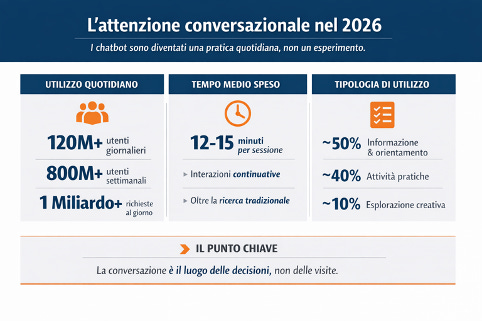
Global usage, US-led (2025 baseline) https://www.index.dev/blog/chatgpt-statistics?utm_source=chatgpt.com
Una parte del calo di traffico è ormai strutturale. Le risposte generate direttamente nei risultati di ricerca riducono il bisogno di cliccare, soprattutto per i contenuti informativi e di servizio più generici. Non si tratta di una flessione temporanea, né di un problema risolvibile semplicemente “facendo meglio SEO”. È un cambiamento di comportamento.
Parallelamente sta emergendo un nuovo spazio di interazione. Le persone iniziano a usare i chatbot non solo per cercare informazioni, ma per orientarsi, chiarirsi le idee, confrontare alternative e arrivare a una decisione. Il tempo speso è maggiore, l’attenzione è più concentrata e l’interazione avviene spesso molto più vicino all’azione finale. In termini qualitativi, siamo davanti a qualcosa di diverso rispetto al click tradizionale.
In questo contesto si inserisce il tema del GEO, la Generative Engine Optimization, spesso presentata come la nuova frontiera per “farsi trovare” nei chatbot e recuperare traffico. In realtà il GEO risponde a un’esigenza tattica: evitare di scomparire dalle superfici conversazionali. Può aiutare a rendere i contenuti più utilizzabili dai motori generativi, più citabili, più coerenti con il funzionamento dei modelli. Ma non cambia il corso degli eventi.
Il punto è che, anche quando un contenuto viene richiamato all’interno di una conversazione, l’utente non sta più cercando un sito da visitare. Sta cercando una soluzione. La conversazione non è un anticamera della navigazione, ma sempre più spesso il luogo in cui la decisione si compie. Pensare che il GEO possa “riportare traffico” significa fraintendere il comportamento dell’utente, non il funzionamento dell’AI.
Questo non rende il GEO inutile. Lo colloca semplicemente al suo posto: una mossa di presidio, non una strategia di crescita. La SEO continuerà a contare ancora per una quota rilevante del traffico complessivo, e per questo non può essere abbandonata. Ma né SEO né GEO sono sufficienti se prese come risposte autonome.
La tesi più scomoda, ma anche più realistica, è che il traffico passivo diventerà sempre più raro. Se un brand o una IP non sono rilevanti, se non risolvono un problema funzionale o aspirazionale, se non riducono complessità o aiutano una scelta concreta, non verranno più esplorati. Né su un sito né dentro un chatbot.
I chatbot stanno diventando una vera infrastruttura di attenzione ad altissima selezione: un luogo in cui si concentra la massima utilità, si riduce l’attrito cognitivo e si accorcia il percorso verso l’azione. In un’infrastruttura di questo tipo non vince chi si ottimizza meglio, ma chi è strutturalmente utile. E’ come se all’ingresso di una festa avessero messo il doppio dei buttafuori. Prima potevi fare una festa tutta tua e sperare che qualcuno venisse oggi questo è sempre meno possibile.
RAG: perché è diventato centrale (e perché se ne parla male)
In questo scenario entra in gioco il RAG, Retrieval-Augmented Generation. Se ne parla spesso come se fosse un tecnicismo per addetti ai lavori, ma in realtà risponde a un problema strategico molto concreto.
Molte aziende, anche europee, lo stanno già utilizzando in produzione. Customer care, knowledge base, supporto alle vendite, contenuti regolati: il RAG viene scelto perché consente di far lavorare l’intelligenza artificiale su contenuti proprietari senza perderne il controllo. I contenuti restano dove sono, non vengono assorbiti indiscriminatamente dal modello, ma vengono consultati quando serve.
Questo approccio è particolarmente adatto a contesti in cui la responsabilità editoriale e la compliance contano davvero. Ed è uno dei pochi modelli che dialoga in modo credibile con il quadro normativo europeo, proprio perché separa l’uso dei contenuti dalla loro appropriazione.
Il RAG non serve a far rispondere meglio l’AI ma a decidere quando e su cosa l’AI può intervenire.
Il nodo vero: i dati, non la tecnologia
Quando si parla di partnership tra aziende editoriali e piattaforme di AI, il tema decisivo è la gestione dei dati.
I dati conversazionali, cioè ciò che l’utente scrive, chiede ed esplora, restano sotto il controllo della piattaforma e sono ancora fortemente protetti. È difficile immaginare, almeno nel breve periodo, un accesso diretto a quel livello di informazione granulare anche se non è escluso, ma si aprirebbe un enorme tema etico e anche una asimmetria di business enorme con gli Stati Uniti.
Diverso è il discorso sui dati legati all’utilizzo dei contenuti editoriali: quali contenuti vengono consultati, su quali temi, con quale frequenza, in quali contesti. Qui esiste uno spazio di negoziazione reale, a patto che si lavori su dati aggregati e anonimizzati.
Il punto di equilibrio più solido si raggiunge quando la conversione avviene su un’infrastruttura dell’editore o dell’azienda. In quel momento i dati tornano a essere first-party. L’AI diventa un canale di attivazione, non il luogo in cui il valore viene catturato.
È su questo passaggio che molte partnership possono davvero sbloccarsi.
GDPR: limite o leva
In Europa il GDPR viene spesso raccontato come un freno all’innovazione. In questo scenario può diventare una leva competitiva. Perché obbliga a chiarire ruoli, responsabilità e perimetri. Costringe a distinguere tra ciò che serve davvero controllare e ciò che può essere condiviso senza distruggere valore.
Non serve conoscere l’identità dell’utente per costruire modelli sostenibili. Serve capire in quali momenti, su quali temi e con quali bisogni le persone interagiscono con i contenuti. È una differenza sottile, ma decisiva.
Da qui nasce l’idea, sempre più concreta, di clean room applicate al conversational layer: ambienti in cui piattaforma e partner condividono insight e performance senza scambiarsi dati personali. Non è fantascienza, ma l’evoluzione naturale di modelli già visti nella pubblicità digitale.
Partnership, licenze, IP: una nuova normalità
Il modello di accordo tra Disney e OpenAI ha reso esplicito un principio che vale anche su scala più piccola: l’accesso all’attenzione può essere regolato.
Non si tratta di cedere contenuti in modo indistinto, ma di concedere licenze, definire perimetri, stabilire condizioni di utilizzo, prevedere attribution e possibilità di revisione. Per molti editori europei questa strada è più realistica di quanto sembri, proprio perché si innesta su un terreno normativo e contrattuale che già conoscono. E’ un gioco per grandi editori e non per piccoli? L’AI è un gatekeeper industriale e ogni nuova infrastruttura porta sconquasso e poi assestamento. Pensiamo un attimo all’arrivo dei social che hanno democratizzato l’accesso di tante piccole imprese alla pubblicità su scala globale abbattendo i costi in modo drammatico. Ogni volta che una tecnologia disintermedia e toglie rendite di posizione crea squilibrio ed è vero che i colossi AI aggregano molto potere ma mi piace vedere le opportunità oltre all’occhio del grande fratello.
La vera domanda per CEO e board
A questo punto la domanda non riguarda più il traffico. Riguarda il costo della presenza.
Seguire il pubblico significa accettare compromessi: revenue share, perdita di controllo su parte della distribuzione, nuovi equilibri contrattuali. Ma restare fuori da questi ambienti ha un costo altrettanto reale, anche se meno immediatamente visibile: l’irrilevanza progressiva.
La strategia, oggi, non è difendere ogni punto di controllo conquistato in passato. È decidere consapevolmente quali asset proteggere, quali condividere e a quali condizioni. È un lavoro che richiede meno ottimizzazione e più giudizio.
Conclusione
Il cambiamento in atto non è una battaglia tra editori e intelligenza artificiale. È una ridefinizione delle infrastrutture dell’attenzione. In Europa questo passaggio sarà più lento, più regolato, forse più complesso. Proprio per questo può essere governato meglio.
Chi saprà usare strumenti come il RAG per mantenere il controllo delle proprie IP, chi tratterà il GDPR come un framework di fiducia e non come un ostacolo, chi accetterà di spostarsi dove si sposta il pubblico senza farlo a qualsiasi prezzo, costruirà un vantaggio reale.
Il traffico, così come lo abbiamo conosciuto, continuerà a ridursi.
La capacità di farsi trovare, di essere utili dentro la conversazione e di accompagnare una decisione resterà centrale.
Ed è qui che serve una competenza diversa: meno tattica, più interpretativa.
La capacità di leggere il contesto, fare sintesi e prendere decisioni prima che diventino obbligate. E forse tornerà di moda il caro vecchio lavoro sul brand e quando si lancerà il prossimo prodotto si penserà davvero: quei quattro buttafuori davanti alla barra del chatbot lo faranno entrare?