

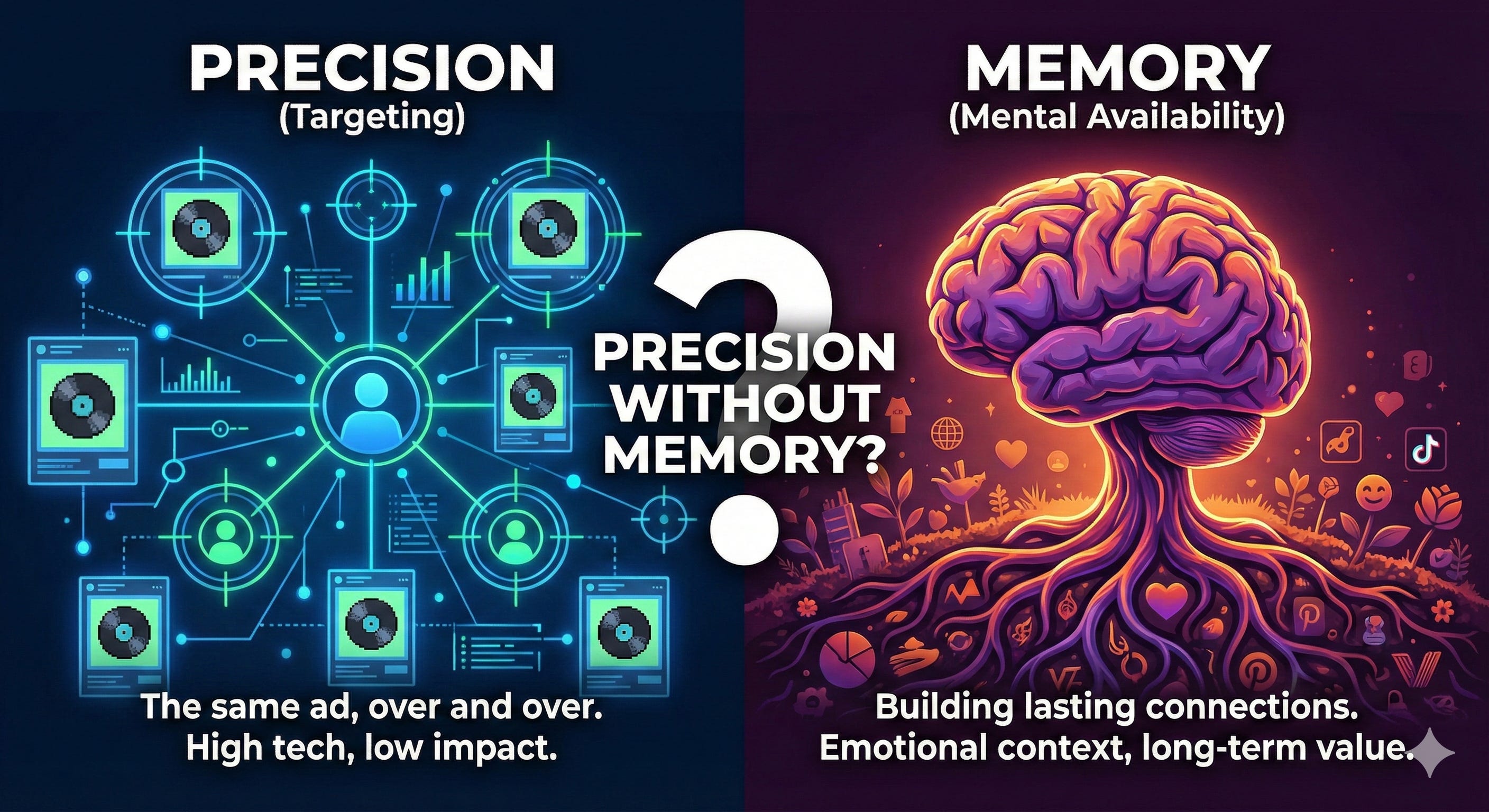
I’ve noticed something lately, and it’s been bugging me.
I’m seeing more ads than ever on streaming platforms and Connected TV, but I’ll be damned if I can remember a single one of them. Maybe it’s just me. Maybe I’m just getting older.
But I think it’s something deeper: we’ve spent years perfecting the technology behind distribution and targeting, but we’ve completely ignored the creative engine.
Essentially, we’ve built a Ferrari to deliver a flyer.
To understand where we’re headed, we have to look at a case that isn’t about TV but perfectly illustrates the shift: Unilever.
The Unilever Lesson: Turning Creativity into an Industry
In a recent episode of my podcast, I broke down the 2025 Unilever case. The company developed an internal platform using AI and “digital twins” of their products to generate creative assets at scale.
This wasn’t just a tech upgrade; it was an industrial shift:
Thousands of assets produced in weeks.
Fast adaptations for different platforms.
Creator content remixed on the fly.
During a Dove campaign, they hit billions of impressions, and more than half the sales came from new customers. The takeaway isn’t about the AI—it’s about turning creativity into a scalable production line.
Netflix’s Playbook: No “Right” Version for Everyone
Streaming platforms have been playing this game for years. When Netflix swaps out thumbnails and trailers based on your history, they aren’t just “being creative” in the romantic sense. They are optimizing the probability of a choice.
There is no “perfect” ad; there’s only the most effective version for you, right now.
The Video Ad Paradox
Here’s where it gets weird. These platforms can personalize content, analyze behavior, and optimize recommendations in real-time. Yet the ads we see are usually the same static, linear spots, repeated until we’re sick of them.
The distribution model has evolved; the creative model is stuck in the past.
It’s Not About the Click—It’s About Frequency Waste
In the CTV world, everyone complains that “you can’t click on a TV ad.” Honestly? I don’t care. The real issue is frequency waste. Seeing the same 30-second spot five times in one hour doesn’t build memory—it builds resentment. Ad fatigue.
Solving this frequency waste is likely the biggest efficiency gain we have on the table today.
Micro-case: Efficiency from Less Error
Imagine a beverage brand investing €5 million a year in video advertising.
The Traditional Model: 1 hero spot, a handful of variants, high frequency, and slow learning.
The Adaptive Model: 1 modular production, 20–30 generated variants, dynamic rotation, and automatic reallocation of impressions to the top performers while the campaign is live.
The media budget stays the same. But saturation drops, relevance peaks, and frequency waste is slashed. Efficiency doesn’t come from spending more; it comes from making fewer mistakes.
The Era of “Profitable Variety”
For years, we’ve cited the Nielsen study that attributed nearly half of a campaign’s success to creativity. We knew it mattered most, but producing high-quality variety was just too expensive.
AI changes the economics. Brand assets must remain consistent, but they shouldn’t be identical every time. Time of day, weather, emotional context: these things change how a product solves a need. The “algorithmic spot” allows us to manage this creative decay on the fly.
Compressing the Choice Latency
By merging digital tracking and retail data, an interesting variable emerges: the latency between message and choice.
When the message matches the user’s real-world context, the cognitive effort to decide drops. This is what I call the contraction of the conversion window. We aren’t just increasing the odds of a sale; we’re reducing the time it takes to get there. We move from delayed recall to near-immediate activation.
Factory 2.0: Killing the Friction
Creators won because they made branded content industrial: low costs, fast turnaround, immediate feedback. TV branded content hasn’t lost its relevance; it’s just lost its efficiency. We’re paying for bespoke tailoring for assets that the digital world consumes and wears out in days.
We need a system where broadcasters and agencies produce modular, platform-exclusive, and sustainable content. By removing the friction between production and media, ads stop being a commodity.
Memory vs. Moment
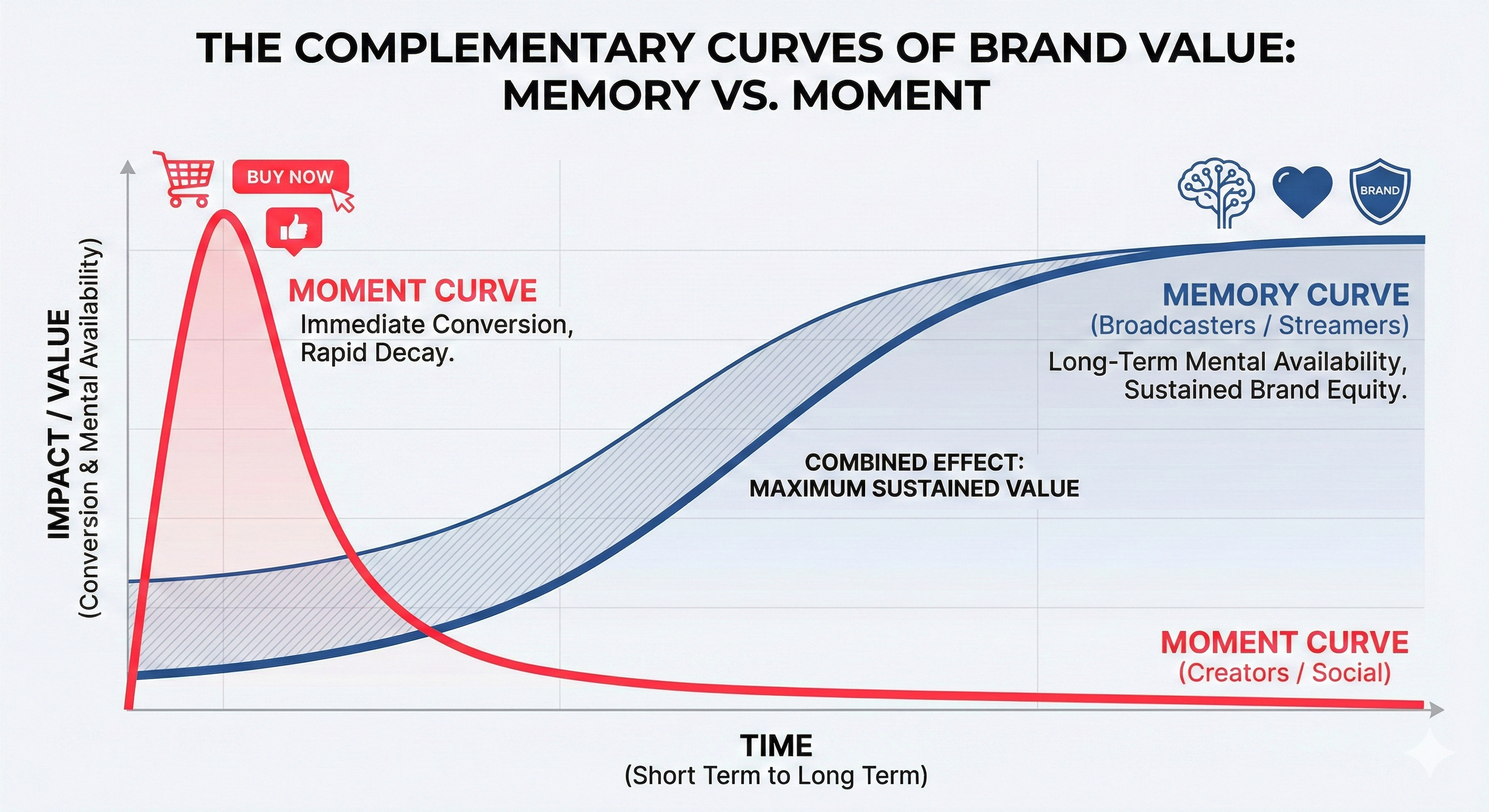
Social media and creators own the MOMENT (immediate conversion). Premium video must own the MEMORY (long-term Mental Availability).
Creators → Short-term sales.
Broadcasters/Streamers → Long-term brand equity.
They shouldn’t fight. They should synchronize.
The Bottom Line
The problem isn’t that we see too many ads. It’s that we see the same ad too many times. If broadcasters can reduce production friction and embrace creative scalability, they will return to the center of the conversation.
Not instead of creators, but right alongside them.
____
Italian version
Precisione senza memoria?
Perché broadcaster e streamer non devono competere con i creator, ma diventare il motore della mental availability.
Ultimamente mi capita una cosa semplice: vedo sempre più pubblicità sulle piattaforme streaming e sulle TV connesse, ma faccio fatica a ricordarne una davvero.
Può essere colpa mia. Magari sto solo invecchiando. Oppure c’è qualcosa di più strutturale: abbiamo migliorato enormemente la tecnologia di distribuzione e targeting, ma non abbiamo migliorato allo stesso modo il sistema creativo.
In pratica, abbiamo costruito una Ferrari per consegnare un volantino.
Per capire dove possiamo andare, vale la pena partire da un caso che non riguarda la TV ma racconta bene la direzione: Unilever.
La lezione Unilever: la creatività diventa un sistema industriale
In una puntata del mio podcast avevo analizzato il caso Unilever del 2025. L’azienda ha sviluppato una piattaforma interna basata su AI e digital twin dei prodotti per generare contenuti creativi in modo scalabile.
Il cambiamento non è stato solo tecnologico. È stato industriale:
Migliaia di asset prodotti in settimane.
Adattamenti rapidi per piattaforme diverse.
Contenuti creator remixati automaticamente.
Nel caso di una campagna Dove, sono stati generati miliardi di impression e oltre la metà degli acquisti proveniva da nuovi clienti. Il punto non è l’AI. Il punto è aver trasformato la creatività in un sistema produttivo scalabile.
Netflix lo fa già: non esiste una versione “giusta” per tutti
Un altro settore lavora da anni su questa logica: lo streaming. Quando Netflix cambia automaticamente locandine e trailer, non sta facendo “creatività” nel senso romantico del termine. Sta ottimizzando la probabilità di scelta.
Non esiste una versione migliore in assoluto. Esiste una versione più efficace per una persona in un determinato momento.
La pubblicità video è ancora sorprendentemente statica
Qui emerge la contraddizione. Le piattaforme personalizzano contenuti, analizzano comportamenti e ottimizzano raccomandazioni. Ma la pubblicità che vediamo è spesso lo stesso spot lineare, ripetuto molte volte, con poche varianti.
Il modello distributivo è evoluto molto più del modello creativo.
Il vero problema non è il click. È lo spreco di frequenza
Nel mondo CTV si dice spesso: “non puoi cliccare”. Ma il tema principale non è quello. Il problema è lo spreco di frequenza. Ripetere troppe volte lo stesso messaggio non costruisce memoria; produce saturazione. Ad fatigue.
Ridurre questo spreco è probabilmente il più grande recupero di efficienza che abbiamo oggi sul tavolo.
Micro-caso: l’efficienza nasce da meno errore
Immaginiamo un brand beverage che investe 5 milioni di euro l’anno in advertising video.
Modello tradizionale: 1 hero spot, poche varianti, frequenza elevata e learning lento.
Modello adattivo: 1 produzione modulare, 20–30 varianti generate, rotazione dinamica e riallocazione automatica delle impression sulle varianti che performano meglio.
Il budget media non cambia. Ma diminuisce la saturazione, aumenta la rilevanza e si riduce lo spreco di frequenza. L’efficienza non nasce da più spesa, nasce da meno errore.
L’era della “Varietà Profittevole”
Per anni abbiamo citato lo studio Nielsen che attribuiva alla creatività quasi metà dell’efficacia di una campagna. Sapevamo che contava di più, ma produrre varietà costava troppo.
Oggi l’AI cambia l’economia della produzione. Gli asset di marca devono restare coerenti, ma non devono essere identici ogni volta. Momento della giornata, meteo, contesto emotivo: cambiano il modo in cui un prodotto risolve un bisogno. Lo spot algoritmico permette di gestire questa “decadenza creativa” mentre la campagna è in corso.
Comprimere la latenza di scelta
Unendo tracking digitale, visite al sito e vendite retail, emerge una variabile interessante: la latenza tra messaggio e scelta. Quando il messaggio è coerente con il contesto reale dell’utente, lo sforzo cognitivo per decidere diminuisce. È la contrazione della conversion window.
Non stiamo solo aumentando la probabilità di acquisto. Stiamo riducendo il tempo necessario per arrivarci.
Factory editoriali 2.0: ridurre la frizione
Il branded content dei creator ha vinto perché è industriale: costi bassi, tempi rapidi, feedback immediato. Il branded content televisivo non ha perso rilevanza; ha perso efficienza produttiva. Paghiamo costi da alta sartoria per asset che il digitale consuma in pochi giorni.
Dobbiamo immaginare un sistema in cui broadcaster e agenzie producono contenuti modulari: esclusivi, adattabili, sostenibili. Riducendo la frizione tra produzione e media, la pubblicità smette di essere una commodity.
Complementari, non concorrenti
I social funzionano per la conversione immediata (MOMENT). Il video premium deve costruire memorabilità e identità (MEMORY).
Creator → vendita nel breve periodo.
Broadcaster/Streamer → disponibilità mentale nel lungo periodo.
Non devono competere. Devono completarsi.
Conclusione
Il problema non è che vediamo troppa pubblicità. È che vediamo troppe volte la stessa. Se broadcaster e streamer sapranno ridurre la frizione produttiva, torneranno a essere centrali. Insieme ai creator, non contro di loro.
Sources & References
Nielsen NCS (2017): Creative remains the top driver, responsible for ~47% of sales lift.
Ehrenberg-Bass Institute / Byron Sharp: The “How Brands Grow” framework on Mental Availability.
Kantar (2025): Research on creative variety and the impact of creative decay on high-frequency campaigns.
Wall Street Journal (2025): Case study on Unilever’s AI-driven content factory and the use of Digital Twins.