

In the last few weeks, the ball has started rolling fast. M&A wars are accelerating, streamer-legacy media partnerships are multiplying. Commentators are calling it: 'finally, legacy media is fighting back against the platforms.' There is no fight. We are witnessing the biggest, most seismic shift in pop culture legitimacy ever recorded. Traditional linear TV, which once shaped and mirrored culture, is now working the lowest part of the funnel — distribution — to defend what's left of its reach-based advertising business, or handing its content over to streamers chasing audiences where they already are, with content still shaped for the previous generation. Brands need to watch this turmoil closely, to understand the new rules of connection with the customers and fans who actually choose them.
italian version of this column available for free on advexpress
Let’s go into this.
Samsung TV Plus just produced its first original scripted series. It didn’t hire a writer’s room. It partnered with Dhar Mann, a YouTuber known for morality-tale videos with tens of millions of subscribers, and lined up a dedicated channel with Mark Rober, the former NASA engineer turned science YouTuber, on the same FAST platform. Netflix, Tubi, Paramount and Roku are chasing the same land grab — the trend now includes creators like Jesser and Dude Perfect, per Adweek, which reported the whole shift under one blunt line: platforms producing “YouTube-style” content at a fraction of studio cost.
Read that again. The companies that spent a century building the machinery to manufacture stars — casting departments, writers’ rooms, promotion budgets, decades of institutional memory on what makes an audience fall in love with someone — are now buying access to stars that machinery didn’t make. They’re renting credibility instead of building it, because building it, apparently, no longer fits the timeline or the balance sheet.
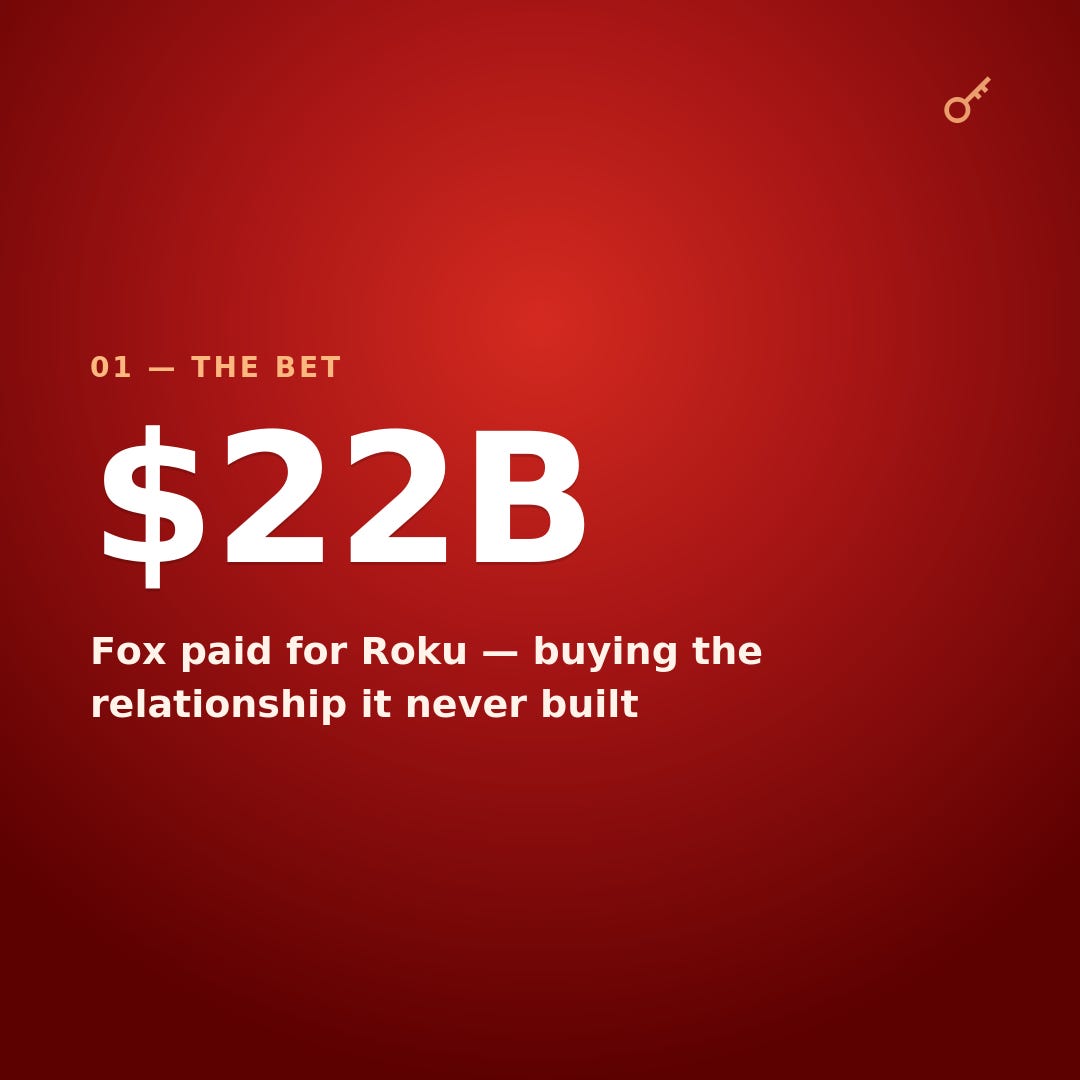
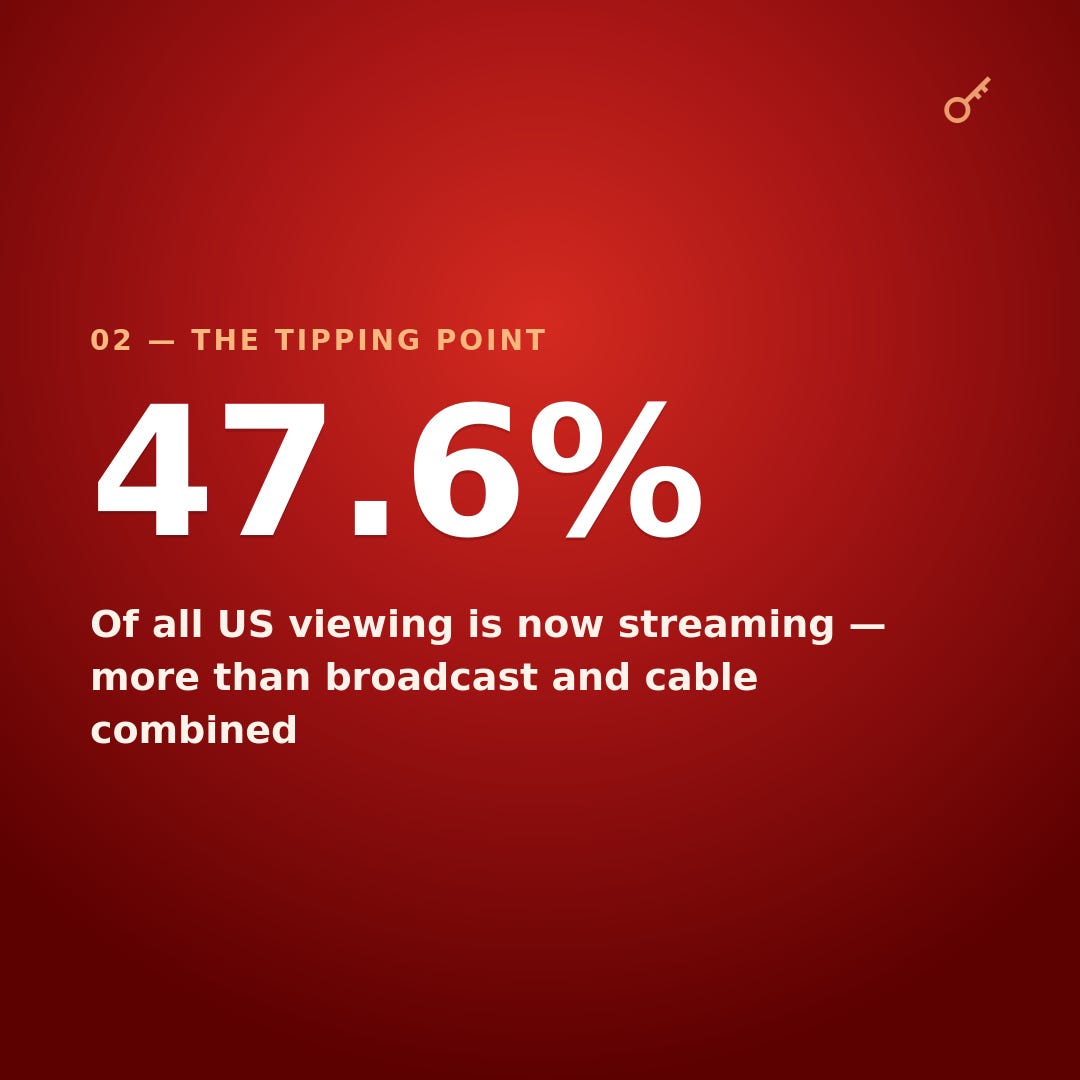
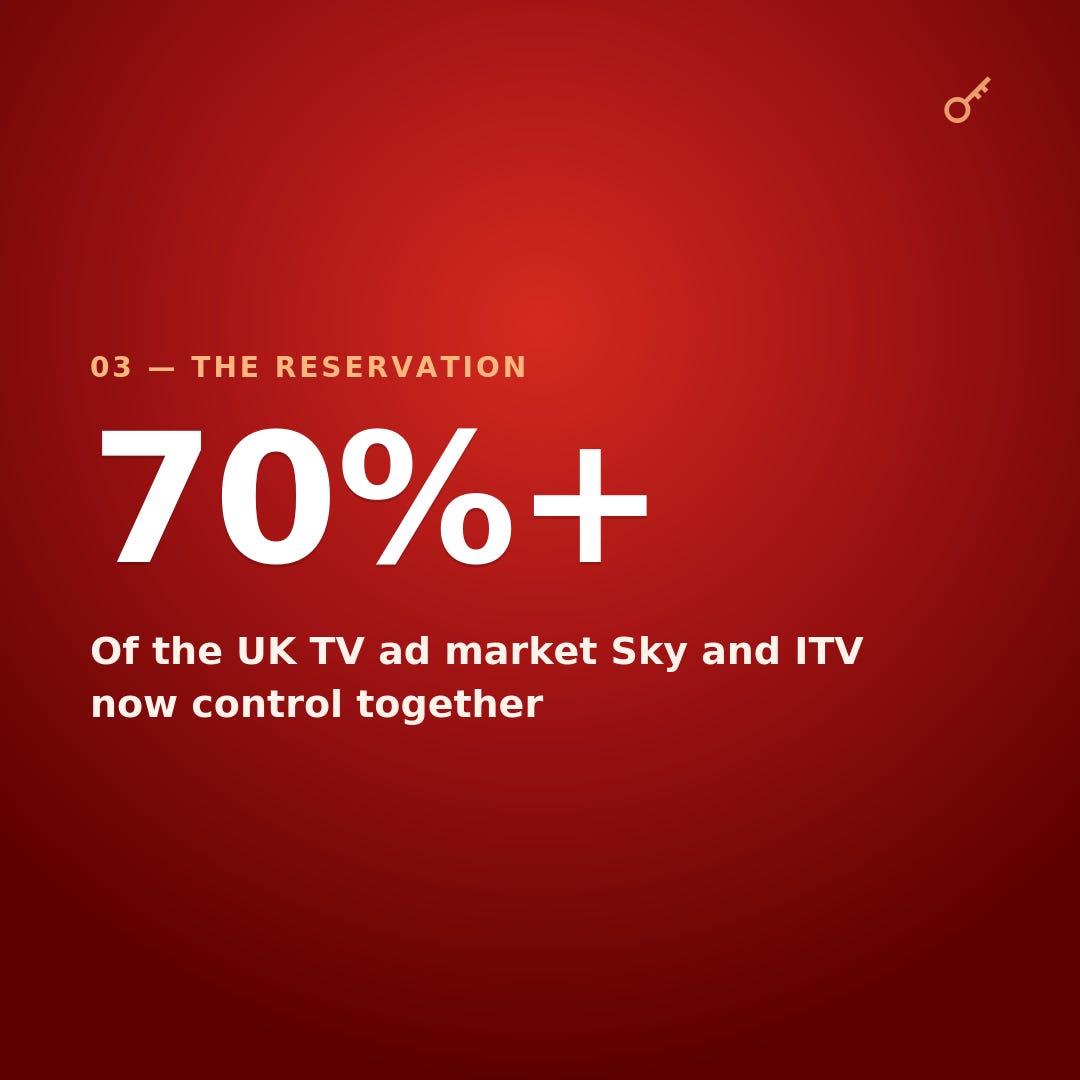
This isn’t a side story. It’s happening at the exact moment the same companies are spending tens of billions defending what’s left of mass reach. Streaming passed the combined viewership of broadcast and cable in May 2025; by March 2026 it was at 47.6%, per Nielsen. Fox paid $22 billion for Roku, whose infrastructure now carries 44% of all US streaming hours — more than triple its nearest competitor. Comcast split NBCUniversal from Sky over how capital markets value content versus infrastructure, then had Sky buy ITV’s broadcast arm a week later, pushing the combined company past 70% of the UK TV ad market. None of that is growth. It’s consolidation on shrinking ground — the last reservation where mass advertising still behaves the way it did twenty years ago, defended because it’s the only thing left that’s still purchasable with the old playbook.
And on that same shrinking ground, the players with the most resources to build something new are choosing to rent instead. That’s the part worth sitting with.
The obvious defense is that a company fighting for survival doesn’t have seven years to spend building anything. Fair — except defending the shrinking room while doing nothing to build a foothold in the next one is closer to repainting the walls while the fire is still burning downstairs. Consolidating faster doesn’t renegotiate the mortgage on the next thirty years. Only new content and new faces, in front of the audience nobody’s currently fighting for, does that.
Nobody planned this. Someone still cashed in on it
Pop culture used to be born on television and trickle down. That machine is broken, and not just for the reasons above. For two decades, ordinary people uploaded videos, argued in comment sections, and built communities around shared jokes and shared taste — with no strategy, no expectation that any of it would be worth anything. YouTube didn’t plant that. It just happened to own the field where it grew, and twenty years later it’s harvesting a cultural dividend nobody, including YouTube itself in its early years, saw coming. Meanwhile a generation that grew up disintermediated — no gatekeeper between them and the people they actually want to hear from — has simply stopped waiting for television to tell them what matters.
European broadcasters spent decades holding something no platform has yet replicated: the deep cultural roots of their own countries — the shows, the fiction, the new local talent that defined how a nation talked to itself. What the current wave of consolidation actually trades away is that position. Fox, Sky and MFE (Mediaset’s pan-European holding company) are buying five, maybe ten more years of the audience that still watches linear — an audience that skews older every year. Social platforms, in the meantime, have already mortgaged the next thirty: an entire generation is forming its cultural vocabulary somewhere broadcasters don’t control and, increasingly, can’t even see.
Brands do the exact same thing, and call it strategy
A company pays a creator for a three-month campaign, gets a burst of borrowed relevance, and calls it influencer marketing. It’s the same transaction Samsung just made with Dhar Mann, just smaller and with a product placed instead of a plot. The credibility isn’t transferred — it’s leased. When the contract ends, the creator’s audience stays exactly where it always was: with the creator. The brand is right back where it started, except now it needs a bigger budget to rent the next one.
Two cases from this year show what the alternative actually looks like — not because they’re unusually cool, but because neither started with anything to rent.
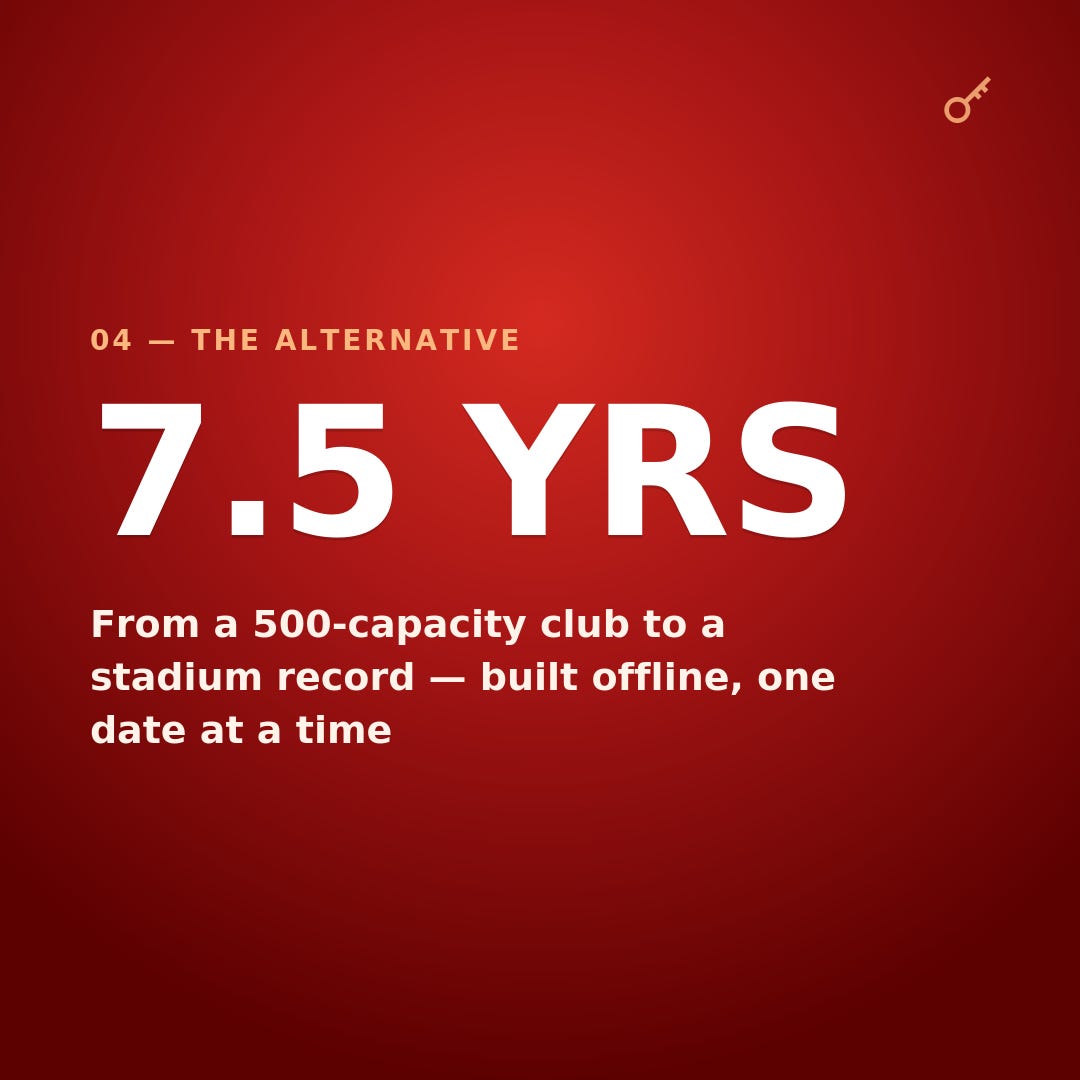
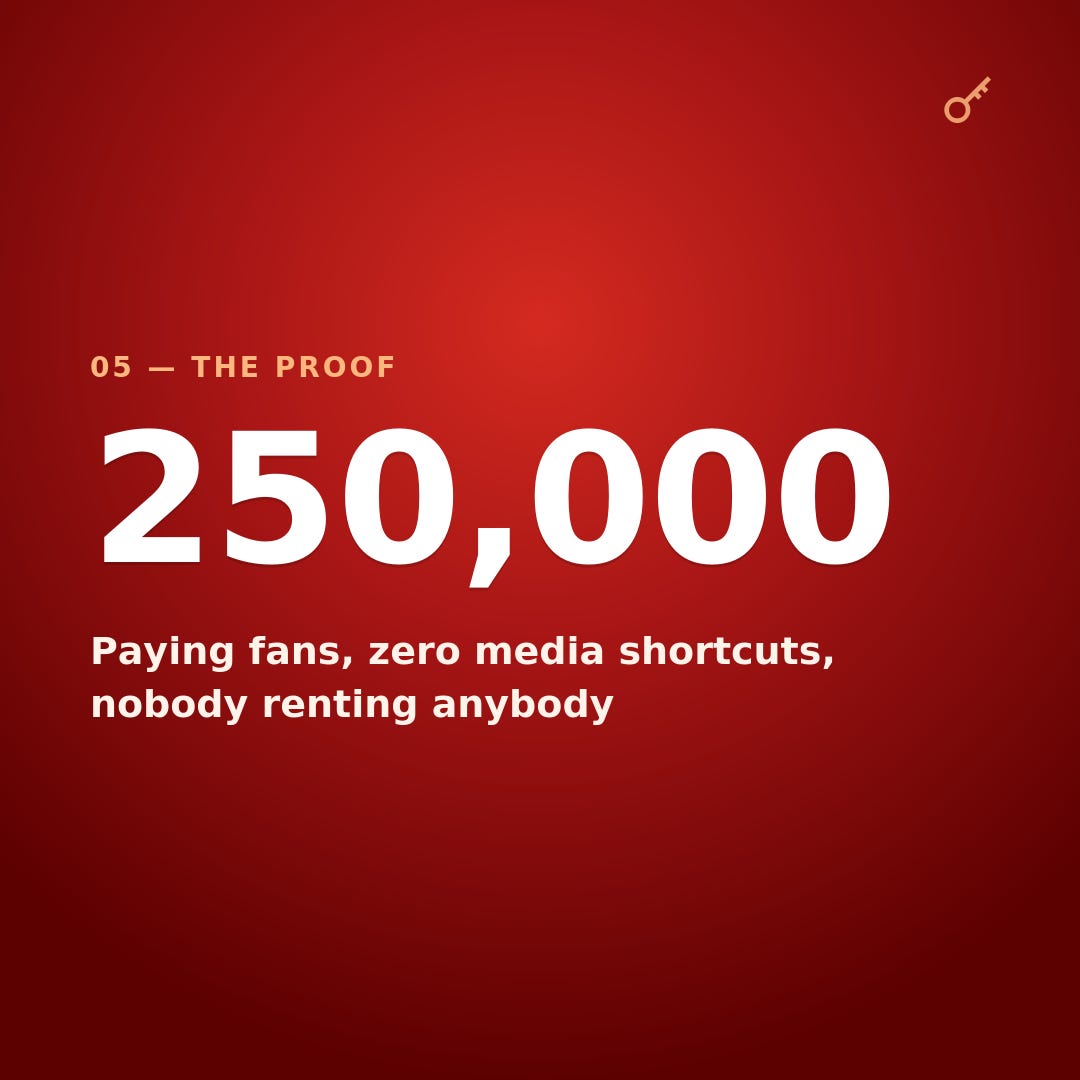
Niccolò Moriconi — stage name Ultimo — was playing to 500 people at a Milan club in January 2018. He won Sanremo Giovani, Italy’s national song contest, that December, sold out Rome’s Olympic Stadium eighteen months later, and by 2022 was drawing 70,000 people to the Circus Maximus with almost no media coverage in between. On July 4, 2026, he gathered 250,000 paying fans at Tor Vergata — the largest paid concert in Italian history, and among the largest paid concerts ever recorded anywhere. Seven and a half years, fifty-three stadium shows, over two million tickets, built one date at a time. The contest gave him exposure once. Everything that actually moved a quarter-million people to camp out for two weeks came after it, built by him, offline, with nobody renting anybody.
Sides — the fried chicken chain launched by British creator collective the Sidemen — started as a group chat about who made the best fried chicken. No media moment, no launch campaign borrowed from anyone else. First store opening: a 38-hour queue. Today: five UK locations, a Singapore outpost, plans for fifteen more. Whatever risk the model carries — and the May 2026 departure of member KSI shows there is one — it isn’t the risk of having rented someone else’s relevance and having it expire.
Neither of these required being interesting in an obvious way
A guy playing a 500-capacity club. A group chat about chicken. Nothing here started with a competitive edge worth renting out. What both had was something more specific and less flashy: an honest point of view that nobody else in their exact lane was saying out loud, built and rebuilt in public until it became something people would show up for without being told to.
That’s available to a mid-market software company as much as it is to a singer or a chicken shop — a real position on a real tension its customers live with, that no competitor is naming. Companies that skip that step and go straight to renting a creator aren’t doing something cheaper. They’re doing the Samsung TV Plus move: buying a temporary shell of relevance from someone who actually built it, on ground that gets more expensive and more contested every quarter it isn’t their own.
__________
italian version
Le media company hanno smesso di creare star. Ora le affittano.
Samsung TV Plus ha appena prodotto la sua prima serie scripted originale. Non ha assunto una writer’s room. Ha fatto squadra con Dhar Mann, uno YouTuber noto per video motivazionali con decine di milioni di iscritti, e ha aperto un canale dedicato con Mark Rober, ex ingegnere NASA oggi tra i più seguiti creator scientifici, sulla stessa piattaforma FAST. Netflix, Tubi, Paramount e Roku stanno inseguendo la stessa corsa all’accaparramento — un trend che secondo Adweek include ormai anche creator come Jesser e Dude Perfect, riassunto in una riga sola: piattaforme che producono contenuto “in stile YouTube” a una frazione del costo di uno studio.
Rileggila. Le aziende che hanno passato un secolo a costruire la macchina per fabbricare le star — casting department, writer’s room, budget promozionali, decenni di memoria istituzionale su cosa fa innamorare un pubblico di qualcuno — oggi comprano l’accesso a star che quella macchina non ha creato. Stanno affittando credibilità invece di costruirla, perché costruirla, evidentemente, non rientra più nei tempi né nel bilancio.
Non è una notizia laterale. Succede nello stesso momento in cui le stesse aziende spendono decine di miliardi per difendere quel poco che resta della reach di massa. Lo streaming ha superato la visione combinata di broadcast e cavo a maggio 2025; a marzo 2026 era già al 47,6%, secondo Nielsen. Fox ha pagato 22 miliardi di dollari per Roku, la cui infrastruttura oggi porta il 44% di tutte le ore di streaming USA — più del triplo del concorrente più vicino. Comcast ha separato NBCUniversal da Sky per come il mercato dei capitali valuta diversamente contenuto e infrastruttura, e una settimana dopo Sky ha comprato la divisione broadcast di ITV, portando la società combinata oltre il 70% del mercato pubblicitario TV britannico. MFE ha fatto un passo in più, creare un player pan europeo, una strada migliore guidata da un aumento della reach e scala tecnologica. Niente di tutto questo però è crescita. È consolidamento su un terreno che si restringe — l’ultima riserva dove la pubblicità di massa si comporta ancora come vent’anni fa, difesa perché è l’unica cosa rimasta ancora comprabile con il vecchio manuale.
E su quello stesso terreno che si restringe, chi ha più risorse per costruire qualcosa di nuovo sceglie invece di affittare. È questo il punto su cui vale la pena fermarsi.
La difesa ovvia è che un’azienda in lotta per la sopravvivenza non ha sette anni da dedicare a costruire alcunché. Giusto — se non fosse che difendere la stanza che si restringe senza fare nulla per mettere un piede in quella successiva assomiglia più a ridipingere le pareti mentre l’incendio brucia ancora al piano di sotto. Consolidarsi più in fretta non rinegozia l’ipoteca sui prossimi trent’anni. Solo nuovi contenuti e volti nuovi, davanti al pubblico per cui oggi nessuno sta competendo, possono farlo.
Nessuno l’ha pianificato. Qualcuno ha comunque incassato
La cultura pop nasceva in televisione e colava a cascata verso il basso. Quella macchina si è rotta, e non solo per i motivi sopra. Per vent’anni, persone comuni hanno caricato video, discusso nei commenti, costruito community attorno a battute e gusti condivisi — senza strategia, senza aspettarsi che ne uscisse qualcosa di valore. YouTube non ha piantato nulla di tutto questo. Si è semplicemente trovata proprietaria del campo dove tutto questo cresceva, e vent’anni dopo sta raccogliendo un dividendo culturale che nessuno, nemmeno YouTube nei suoi primi anni, aveva previsto. Nel frattempo una generazione cresciuta senza intermediari — nessun gatekeeper tra loro e le persone che vogliono davvero ascoltare — ha semplicemente smesso di aspettare che fosse la televisione a dirgli cosa conta.
I broadcaster europei hanno passato decenni a custodire qualcosa che nessuna piattaforma ha ancora replicato: le radici culturali profonde dei loro paesi — i programmi, la fiction, i nuovi talenti locali che definivano il modo in cui una nazione parlava a se stessa. Quello che l’attuale ondata di consolidamento sta davvero svendendo è proprio quella posizione. Fox, Sky e MFE (la holding pan-europea di Mediaset) stanno comprando cinque, forse dieci anni in più del pubblico che guarda ancora il lineare — un pubblico che invecchia ogni anno di più. Le piattaforme social, nel frattempo, hanno già ipotecato i prossimi trenta: un’intera generazione sta formando il proprio vocabolario culturale in un posto che i broadcaster non controllano e, sempre di più, non riescono nemmeno a vedere.
I brand fanno esattamente la stessa cosa, e la chiamano strategia
Un’azienda paga un creator per una campagna di tre mesi, ottiene un’esplosione di rilevanza presa in prestito, e la chiama influencer marketing. È la stessa transazione che Samsung ha appena fatto con Dhar Mann, solo più piccola e con un prodotto piazzato al posto di una trama. La credibilità non si trasferisce — si affitta. Quando il contratto finisce, il pubblico del creator resta esattamente dov’era sempre stato: con il creator. Il brand è punto e a capo, solo che ora gli serve un budget più grande per affittarne un altro.
Due casi di quest’anno mostrano come appare davvero l’alternativa — non perché siano insolitamente cool, ma perché nessuno dei due aveva niente da affittare all’inizio.
Niccolò Moriconi — nome d’arte Ultimo — suonava per 500 persone in un locale di Milano nel gennaio 2018. Ha vinto Sanremo Giovani, il contest canoro nazionale italiano, quel dicembre, ha fatto sold-out all’Olimpico di Roma diciotto mesi dopo, e nel 2022 radunava già 70.000 persone al Circo Massimo con quasi nessuna copertura mediatica nel mezzo. Il 4 luglio 2026 ha riunito 250.000 fan paganti a Tor Vergata — il concerto a pagamento più grande nella storia italiana, e tra i più grandi mai registrati al mondo. Sette anni e mezzo, cinquantatré date negli stadi, oltre due milioni di biglietti, costruiti una data alla volta. Il contest gli ha dato visibilità, una volta sola. Tutto quello che ha davvero spinto un quarto di milione di persone ad accamparsi per due settimane è arrivato dopo, costruito da lui, offline, senza che nessuno affittasse nessuno.
Sides — la catena di pollo fritto lanciata dal collettivo di creator britannici Sidemen — è nata da una chat di gruppo su chi facesse il pollo fritto migliore. Nessun momento mediatico, nessuna campagna di lancio presa in prestito da altri. Apertura del primo negozio: 38 ore di coda. Oggi: cinque locali nel Regno Unito, un avamposto a Singapore, piani per altre quindici aperture. Qualunque rischio porti con sé questo modello — e l’uscita di KSI dal gruppo a maggio 2026 dimostra che un rischio c’è — non è il rischio di aver affittato la rilevanza di qualcun altro e di vedersela scadere.
Nessuno dei due doveva essere interessante in modo ovvio
Un ragazzo che suona in un locale da 500 posti. Una chat di gruppo sul pollo fritto. Niente di tutto questo partiva da un vantaggio competitivo da affittare. Quello che entrambi avevano era qualcosa di più specifico e meno appariscente: un punto di vista onesto che nessun altro, nella loro esatta nicchia, stava dicendo ad alta voce — costruito e ricostruito in pubblico finché non è diventato qualcosa per cui la gente si presentava senza che nessuno glielo chiedesse.
Questo vale per un’azienda di software di fascia media tanto quanto per un cantante o un marchio di pollo fritto — una posizione reale su una tensione reale che i suoi clienti vivono, che nessun competitor sta nominando. Le aziende che saltano questo passaggio e vanno dritte ad affittare un creator non stanno facendo qualcosa di più economico. Stanno facendo la mossa di Samsung TV Plus: comprare un guscio temporaneo di rilevanza da chi l’ha davvero costruita, su un terreno che diventa più caro e più conteso ogni trimestre in cui non è il tuo.